10 Proven Ways to Increase Traffic Site in 2026
Discover 10 proven ways to increase traffic site visits through search, content, and email, with practical steps for Shopify stores.
Published 15 min read
In this article
- Table of Contents
- 1. Keyword-Driven Blog Content Strategy
- 2. Internal Linking from Content to Product and Collection Pages
- 3. Product and Collection Page SEO Optimization
- 4. Google Search Console Performance Analysis
- 5. Backlink Acquisition Through Relevant Mentions
- 6. Multilingual and Regional Search Targeting
- 7. Content Refresh and Update Strategy
- 8. Technical SEO and Site Speed Optimization
- 9. Image and Visual Search Optimization
- 10. Email Newsletter Traffic Driving from Blog Content
- How the ten traffic strategies compare on timing, fit, and channel
- Turning Ten Strategies Into a Repeatable Traffic Plan
A store can hold the same traffic number for months while everything behind it improves. Product photos get reshot, reviews accumulate, collection pages finally get written by someone who understands the category, and Shopify Analytics still reports the same few hundred sessions from the same five countries. The blog explains part of it. Six posts went up in one energetic month, two more followed, none of them point at a product, and nobody checked whether the keywords had any volume.
Traffic stalling is rarely one broken thing. It's a set of channels that never got wired together. Search sends readers to articles that don't sell anything. Product pages rank for nothing because their titles are copied from the manufacturer. Email goes out only during a sale. Images load slowly enough on mobile that visitors leave before the page renders. Anyone trying to increase traffic site-wide eventually faces the same question, which is not "which channel is best" but "which channel is closest to working."
The ten strategies below are grouped by the job they do. Keyword planning, internal linking, commercial page optimization, Search Console analysis, backlinks, and regional targeting all build search visibility. Refreshing published articles protects what already ranks. Technical health, visual search, and email extend reach past the search results page. Each entry names a concrete example and a realistic window for results, because when traffic moves depends entirely on the channel.
Table of Contents
- 1. Keyword-Driven Blog Content Strategy
- 2. Internal Linking from Content to Product and Collection Pages
- 3. Product and Collection Page SEO Optimization
- 4. Google Search Console Performance Analysis
- 5. Backlink Acquisition Through Relevant Mentions
- 6. Multilingual and Regional Search Targeting
- 7. Content Refresh and Update Strategy
- 8. Technical SEO and Site Speed Optimization
- 9. Image and Visual Search Optimization
- 10. Email Newsletter Traffic Driving from Blog Content
- How the ten traffic strategies compare on timing, fit, and channel
- Turning Ten Strategies Into a Repeatable Traffic Plan
1. Keyword-Driven Blog Content Strategy
Organic search carries more commercial weight than most store owners assume. In 2024, organic search generated 33% of overall website traffic on average across seven key industries, according to the 2024 Organic Search Traffic Benchmarks Report, which analyzed more than 800 enterprise domains.

A keyword-driven strategy means choosing topics before writing, not after. Each article gets one primary query with enough measured volume to matter and a difficulty the store can realistically reach, then maps to one product or collection that answers the reader's next question.
One Keyword, One Page, One Product
- Volume with intent: skip the broad head term and target the phrase a shopper types when they're close to a decision, such as "cast iron skillet for glass top stove."
- A single commercial destination: every article links to one collection or product page, so the reader has an obvious next step.
- Page-two fixes first: filter Search Console for queries where the store already appears on page two and expand that article instead of starting a new one.
- A calendar that survives a busy month: two posts published on schedule beats ten in one week followed by a quarter of silence.
A home goods store does this with a guide on choosing a cast iron skillet that ends at the skillet collection. An outdoor gear store runs seasonal packing checklists in spring and autumn that link to the tents and sleep systems those lists recommend. The planning process behind that calendar is set out in this guide to developing a content strategy.
Expect first impressions within a few weeks of indexing and meaningful clicks from month three onward. Difficulty scores drive the whole plan, so it's worth knowing where a tool's numbers come from. This independent verdict on Semrush for marketers covers that side.
2. Internal Linking from Content to Product and Collection Pages
An article that ranks and links nowhere is a dead end for the store. Internal links do two jobs at once. They pass ranking signals from pages that already earn authority toward commercial pages that need it, and they move readers from a question to a product while the question is still in their head.
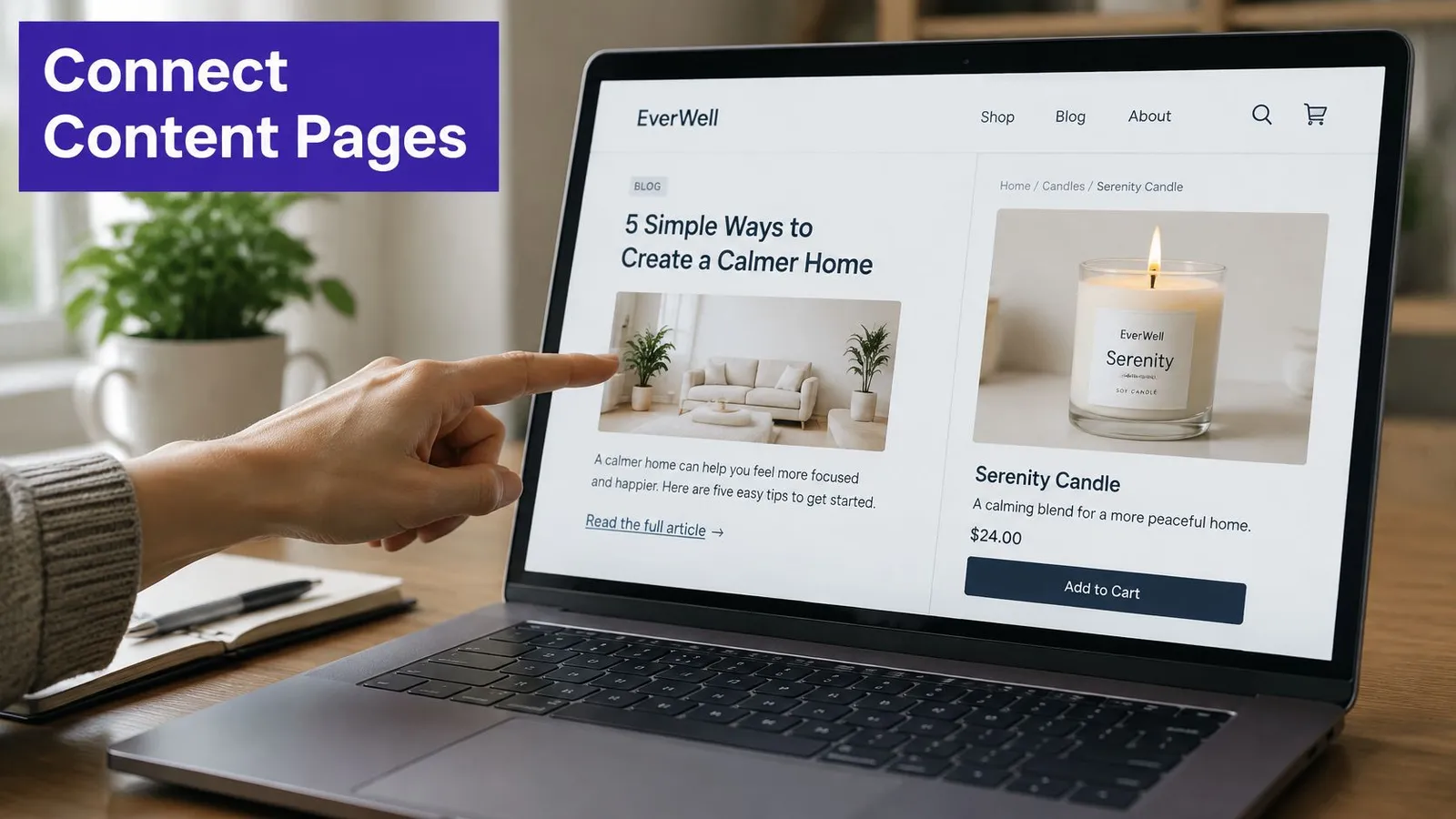
What a Useful Internal Link Looks Like
Anchor text should describe the destination in words a reader would use, not repeat a keyword for its own sake. "Sensitive skin cleanser" works. "Best cleanser buy now" reads like a billboard. A skincare article about morning routines can send readers to a cleanser product page and a daily essentials collection in the same paragraph without either link feeling planted. A puppy training guide does the same job when it points at a collection of training treats and toys.
Practical rule: If deleting the link wouldn't make the sentence worse, the link belongs somewhere else in the paragraph.
Older articles deserve an audit once or twice a year, because products added after publication rarely get linked. Check that every destination is indexable, returns a 200 status, and isn't sitting behind a redirect chain left over from a renamed product.
Timelines are slow here. Internal links seldom produce visible movement inside four weeks, and the effect compounds as more articles point at the same collection. The full method sits in this guide to internal linking strategy.
3. Product and Collection Page SEO Optimization
In 2024, 58.5% of Google searches in the United States ended without a click, according to SparkToro's study using Datos clickstream data. That number reframes commercial pages. The snippet a shopper sees often has to do the selling on its own, which makes the title tag, the meta description, and the first paragraph of a collection page commercial assets rather than formatting chores.
Where to Start When the Catalog Is Large
- Best sellers first: rewrite the ten products that already earn revenue before touching long-tail items nobody searches for.
- Unique descriptions: manufacturer copy appears on dozens of competing stores, so it differentiates nothing.
- Collection pages for category demand: a collection targets the broader term while individual products target material, size, and model queries.
- Specification tables and FAQs: sizing, materials, compatibility, and care questions belong on the product page, not buried three clicks away in a blog post.
A home goods store rewrites its cookware collection description to explain pan materials and oven safety, then adds a spec table and a care FAQ to its three top skillets. Impressions on those commercial URLs climb while the blog sits flat, which is the pattern to look for.
Search Console shows which queries already put a commercial page in front of people, and improving those pages is cheaper than earning new visibility. Title and description edits tend to shift click-through within two to four weeks. Ranking movement for a competitive category query usually takes a quarter or more. The full checklist lives in this guide to on-page optimization.
4. Google Search Console Performance Analysis
Search Console is the closest thing to a diagnostic report a Shopify store gets for free. Google's Search Console performance reports organize search data by impressions, clicks, queries, countries, and pages, with average position alongside, and the default view covers the previous three months of clicks and impressions.
Most stores don't look. Fewer than half of store owners actively track website traffic, according to Shopify's guide to increasing website traffic, which leaves the channel with the longest payback and the weakest measurement.

Three Filters That Pay for Themselves
- Queries with impressions and no clicks: a title that doesn't match the query is the usual cause, and a rewrite is a ten-minute fix.
- Positions 11 to 20: these are the cheapest ranking gains available, usually a missing section rather than a new article.
- The country filter: it reveals where the store already appears abroad before anyone invests in translation.
A kitchen retailer finds a knife skills article sitting at position 14 for "how to sharpen a chef's knife," adds a section on whetstone grits and honing angles, and watches it move onto page one within six weeks. The same report shows which new URLs need submitting for indexing and which coverage errors are blocking pages entirely.
Compare periods of at least four to six weeks, because a shorter window catches recrawling rather than results. The wider method for reading organic data sits in this guide to organic search traffic.
5. Backlink Acquisition Through Relevant Mentions
Links still move rankings, but only when they come from pages that could plausibly send a customer. A specialty food store that publishes a regional sourcing guide can earn citations from local food bloggers writing about the same producers. A furniture retailer that runs its own survey on material durability has something industry publications can reference, which is a different asset from a press release.
Earning Links with Resources People Cite
- One useful asset per quarter: a data page, a calculator, or a complete guide outperforms twenty thin posts.
- Relevance before authority: a link from a niche publication in the category beats a high-metric site about something unrelated.
- Personalized outreach: name the page, the specific paragraph, and the reason it fits, because template emails get deleted.
- Monitor referring domains: watch for new links, and disavow only clearly spammy ones rather than chasing every low-quality mention.
A link from a page nobody reads still counts for little. Referral traffic is the honest signal that the mention was worth having.
The trade-off is worth stating plainly. Paid link networks and mass guest posting deliver volume that sends no visitors, and reciprocal arrangements only help while the links stay relevant to both audiences. A store trading links with a wedding venue because both are local is fine. A store trading links with fifty unrelated blogs is buying noise.
Expect three to six months for a resource to accumulate citations, and plan for one follow-up rather than five, because reply rates fall off a cliff after the second email. The outreach process is covered in this guide to how to do backlinks.
6. Multilingual and Regional Search Targeting
Internet access still varies sharply by income level and region, so choosing the right markets matters more than how many languages you add. A store that already ships to Germany and France will get more from two well-localized catalogs than from ten machine-translated ones. Each language version of a blog post, collection page, and product page has to support the others before any of them rank.
Localize, Don't Translate
Machine translation preserves words and loses intent. A German shopper searching for sizing information uses different phrasing from an English one, and a French product page that reads like translated English signals a foreign store rather than a local option.
- Separate keyword research per market: build the term list natively instead of translating the English one, then let those terms shape collection names and product descriptions rather than blog posts alone.
- Native-level rewriting: a translator who also understands the category beats a fluent translator who doesn't.
- Two or three markets at a time: pick the ones with existing sales or shipping strength, then expand once those versions earn impressions.
- Country-level reporting: monitor performance by country in Search Console so a weak market can be diagnosed rather than guessed at.
A fashion retailer publishes sizing guides in German and French using market-specific terminology and local measurement conventions, then links each guide to the matching localized collections so the new pages enter the index with internal links already in place. A supplement store adapts product explanations to regional regulations and local search phrasing, because a claim that's ordinary in one country can be restricted in another.
Give a new language four to eight months before judging it. Translation is fast; earning trust in a new results page is not.
7. Content Refresh and Update Strategy
In 2025, 82% of marketers said content marketing was a core part of their strategy, according to Zebracat's content marketing statistics report. That volume makes differentiation harder and turns the store's own underperforming pages into an asset. They already exist, already have links, and already sit in the index.
When Refreshing Beats Publishing
- Pages losing traffic: a three-month decline in clicks on a URL that used to perform is the clearest refresh signal available.
- Date changes without substance: updating a publication date on unchanged content teaches readers to distrust it.
- Overlapping articles: two posts competing for one query usually rank worse than one consolidated page.
- New product links: an article written before a collection launched can't link to it, and that's usually the fastest gain.
A seasonal gift guide gets updated each year with current products and fresh internal links. A best-performing buying guide that slipped after a competitor overhaul gets new sections and FAQs rather than a replacement.
Refresh test: If a reader arriving from search would need a second article to answer their question, the first one isn't finished.
Refreshes on an indexed URL often show movement in two to six weeks, which is faster than anything new will do. Review articles every six months, prioritise the ones already losing clicks, and consolidate anything that duplicates intent.
8. Technical SEO and Site Speed Optimization
Speed is measurable, which makes it one of the few SEO arguments that can be settled with a test rather than an opinion. Google's thresholds are specific. Largest Contentful Paint should be 2.5 seconds or faster, Interaction to Next Paint below 200 milliseconds, and Cumulative Layout Shift below 0.1, as set out in Google's Core Web Vitals guidance.
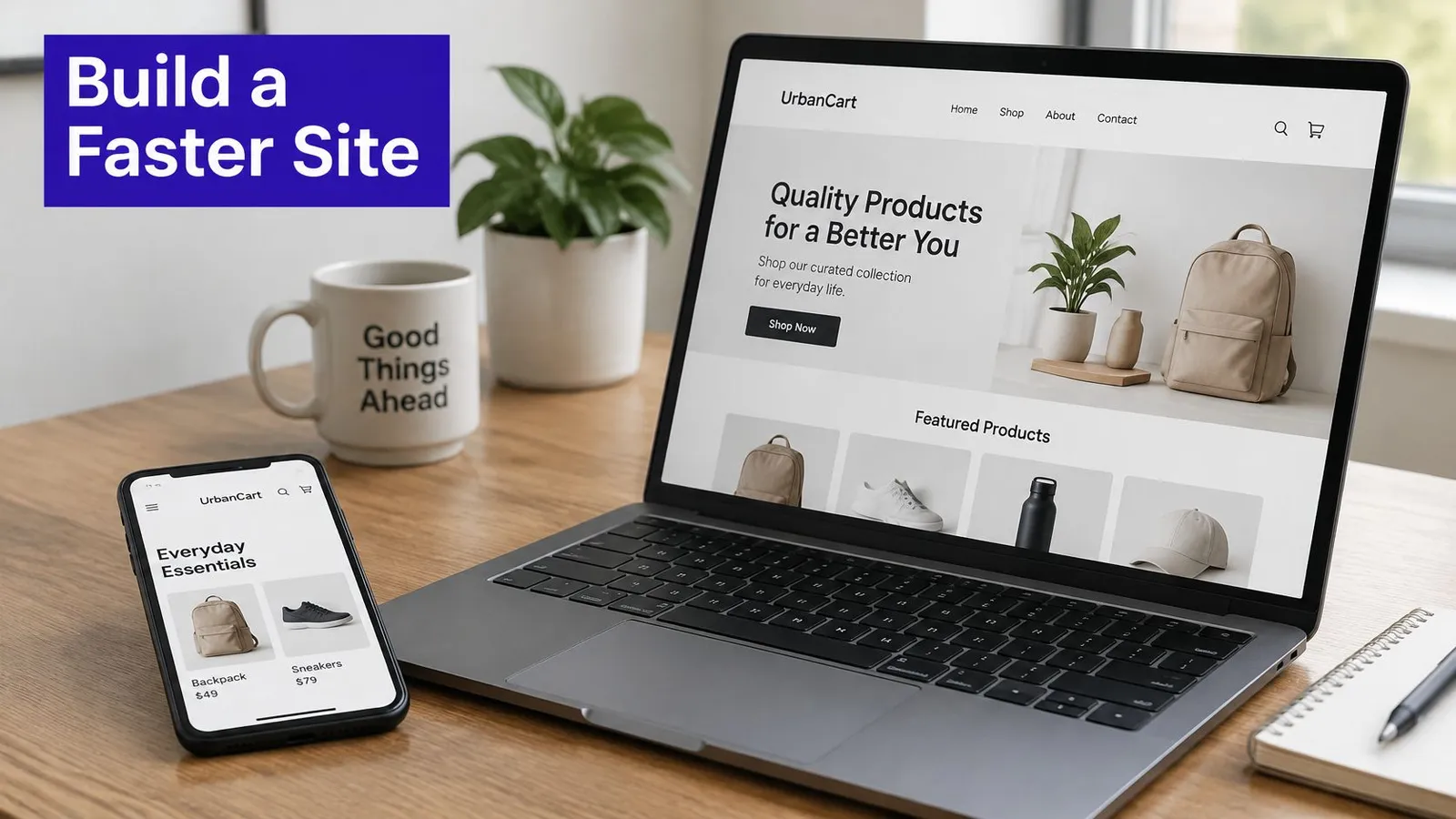
On Shopify, the platform is rarely the bottleneck. Themes, apps, and uncompressed media are.
Where Slow Stores Lose the Most
- Oversized images: a hero photo at three times its display width adds seconds to load times on mobile.
- Unused app scripts: every app that injects JavaScript into the theme charges rent on every page view, including the blog.
- Missing image dimensions: reserving width and height prevents the layout shift that makes a page feel broken.
- Redirect chains: renamed products and collections leave trails that slow crawling and leak signals.
A practical workflow starts by exporting URL groups from Search Console, identifying which template and which app appear on the slowest groups, and fixing the highest-value landing pages first. A fast blog post doesn't compensate for a slow collection page that receives the click.
The walkthrough below shows how these fixes look on a live store.
Field data lags behind lab tests by weeks, so recheck Search Console after a month rather than the next day. Platform-level choices also matter, and these platform picks for online store owners cover the structural side. Core Web Vitals aren't a guaranteed ranking shortcut, but they remove a reason for visitors to leave.
9. Image and Visual Search Optimization
Visual search begins earlier in the buying journey than text search, particularly in categories where appearance is the product. Furniture, apparel, and homeware shoppers often start in image results and only later read a description. That traffic converts differently, and it's worth its own effort.
File Names and Alt Text Do Different Jobs
- File name: decide it before upload, because it survives in the image URL and gets read by both search engines and image tools.
- Alt text: describe what the image shows for someone who can't see it, since keyword stuffing is unhelpful and easy to detect.
- Original photography: stock images appear on hundreds of sites, while a clear phone photo of the actual product can own an image query.
- Compression: use modern formats and serve each image at roughly the largest size the layout displays.
A furniture store photographs real room settings rather than white-background cutouts, and those images show up in image results where buyers browse styles before they read reviews. An apparel brand publishes styling infographics that other blogs embed with attribution, building both image visibility and links.
Image results tend to appear within weeks of indexing, faster than most text rankings. The catch is intent. Image visitors rarely buy on the first session, so judge the channel by assisted conversions and returning visitors instead of first-click revenue.
10. Email Newsletter Traffic Driving from Blog Content
Email is the only channel a store owns outright, and the blog is the cheapest thing to fill it with. Search visitors can vanish after an algorithm update. Subscribers don't.
Make the Article the Email, Not the Announcement
- Sign-up placement: put the form at the end of high-performing articles, where the reader has just finished getting value.
- Send only with substance: a newsletter that exists because the calendar says Tuesday trains people to ignore it.
- Segments: someone who bought a grinder wants brewing content, not a beginner's guide to coffee.
- Track article visits from email: tag links, then compare engaged sessions against search traffic to see which articles travel.
A coffee retailer sends a monthly newsletter with a brewing guide and links to the beans discussed in it. A kitchen store emails subscribers when a new recipe article publishes, with the ingredients mapped to products. Both turn recurring content into a reason to return rather than a reason to unsubscribe.
The economics favour it. Newsletters remain one of the cheapest growth channels available to small companies, which matters when paid acquisition costs keep climbing.
Judge email over two quarters, not two sends. Lists grow slowly at first, then compound once a few articles reliably earn replies and forwards.
How the ten traffic strategies compare on timing, fit, and channel
| Strategy | Time to Results | Best For | Primary Channel |
|---|---|---|---|
| Keyword-Driven Blog Content Strategy | Typically 3–6 months | Stores with a catalog that answers common customer questions | Organic search |
| Internal Linking from Content to Product and Collection Pages | Often within weeks | Stores with blog content but weak connections to their catalog | On-site internal links |
| Product and Collection Page SEO Optimization | Usually 1–3 months after reindexing | Stores with substantial product catalogs and existing organic visibility | Organic search |
| Google Search Console Performance Analysis | Insights immediately; improvements within weeks to months | Store owners seeking data-driven SEO priorities | Search performance analytics |
| Backlink Acquisition Through Relevant Mentions | Often 2–6 months; varies widely | Stores with a clear niche and cite-worthy content | Outreach and referral links |
| Multilingual and Regional Search Targeting | Often 4–9 months per market | International retailers serving multiple languages and regions | Localized organic search |
| Content Refresh and Update Strategy | Often within 4–8 weeks | Stores with an established blog and aging articles | Organic search |
| Technical SEO and Site Speed Optimization | Speed improvements immediately; ranking gains may take several weeks | Stores with slow pages, indexing problems, or technical issues | Website technical optimization |
| Image and Visual Search Optimization | Often 4–12 weeks | Visually driven stores in fashion, home, food, and lifestyle | Image and visual search |
| Email Newsletter Traffic Driving from Blog Content | Immediate for sends; list growth takes several months | Stores with recurring blog output and existing customer relationships | Email newsletters |
Turning Ten Strategies Into a Repeatable Traffic Plan
These channels feed each other in a specific order. Keyword research decides what gets written. Articles give internal links something to connect, and those links push authority toward product and collection pages that carry the actual margin. Refreshes keep those pages from decaying, technical health stops the whole investment leaking out through a slow template, and images and email extend the same content into places search can't reach alone. Break one link in that chain and the others underperform.
Measurement is where most plans fail. Appearances in AI features are counted inside Search Console's overall Web search traffic, as Google's guide to AI features in Search explains, so a merchant can't separate AI-sourced visibility into its own channel or assume a citation produced a session. The practical response is to track branded search volume, landing page engagement, product page visits, and assisted conversions alongside raw clicks.
Search remains the largest trackable channel for most stores. BrightEdge's channel-share analysis puts organic search at approximately 53.3% of trackable website traffic, with organic and paid search together around 68%, according to the BrightEdge channel share report. That figure excludes direct traffic, so it isn't a universal average to plan against, but it does justify giving search demand priority over sporadic posting.
A realistic 30-day start looks like this. Pull the ten keywords that map most directly to best-selling collections and write them down. Fix internal links in five existing posts, pointing each at a product or collection that answers the paragraph. Rewrite titles for three queries with high impressions and low clicks. Compress the ten heaviest images on the store. Send one newsletter built around an existing article. None of that requires new content, and all of it compounds.
For stores without a content team, Rankira is a Shopify-native SEO content app that handles keyword research, article drafting, scheduling, and internal linking, then publishes to the store's Shopify blog with product and collection context attached. It also reports search performance, so the loop above can be measured in one place. No tool guarantees rankings, traffic, or revenue, and the work of choosing what deserves to rank still belongs to the merchant.
Rankira researches keywords against a store's own products and collections, drafts and schedules the articles, and links each one back to the pages that sell, all inside Shopify administration. If the content calendar has gone quiet, the Standard plan starts with a seven-day trial and includes the backlink exchange and search performance reporting. Start at Rankira and give the next 30 days a plan instead of a burst of posts.
Keep reading
All articles
Shopify SEO
Meta Description Check: How to Audit and Fix Yours
Run a meta description check in page source or an SEO editor, judge length and query fit, and rewrite only the descriptions that mislead or repeat across pages.
10 min read
Shopify SEO
Title Tags SEO: How to Write Titles That Earn Clicks
Title Tags SEO explained: what a title tag is, how Google picks the title shown in results, and how to write titles that earn clicks.
10 min read
Shopify SEO
10 Best Blog Topics Shopify Stores Should Publish
Discover the 10 best blog topics for Shopify stores, from buying guides to FAQ articles, with practical tips to turn readers into customers.
16 min read
Put your Shopify blog on autopilot
Rankira researches keywords, writes SEO articles, adds internal links, and publishes them to your store — every week. Start with a 7-day free trial.