Search Engine Positioning SEO Explained for Organic Growth
Search engine positioning SEO explained: learn how rankings and SERP visibility are measured, plus practical ways to improve and monitor organic positions.
Published 11 min read

In this article
- Table of Contents
- Why Search Engine Positioning SEO Still Matters
- How Search Engines Decide Where Pages Rank
- Measuring Rankings and SERP Visibility
- Technical Signals That Support Stronger Positions
- Telling Ranking Loss Apart From Lost Clicks
- Comparing Tools and Approaches for Tracking Positions
- Building a Monitoring Routine for Organic Positions
Google accounts for the largest share of worldwide search-engine usage in StatCounter's search-engine market share data, so search engine positioning SEO deserves a merchant's attention. Treat position as one signal: read it beside clicks, impressions, and whether the landing page helps a shopper reach a relevant product.
Table of Contents
- Why Search Engine Positioning SEO Still Matters
- How Search Engines Decide Where Pages Rank
- Measuring Rankings and SERP Visibility
- Technical Signals That Support Stronger Positions
- Telling Ranking Loss Apart From Lost Clicks
- Comparing Tools and Approaches for Tracking Positions
- Building a Monitoring Routine for Organic Positions
Why Search Engine Positioning SEO Still Matters
Search engine positioning is the ongoing work of earning and maintaining visibility for relevant searches. For a Shopify store, that means helping the appropriate product page, collection, or article appear when a potential customer searches for something the store can help with.
The simplest analogy is a shop window on a busy street. A well-placed display gives passersby an opportunity to notice the merchandise. It doesn't guarantee that they'll enter, find something suitable, or buy.
Google's share of search activity explains why merchants commonly prioritize its results. However, the StatCounter figure measures search-engine usage, not the clicks, rankings, or revenue available to an individual store. It's a directional benchmark, not a traffic forecast.
Position is an opportunity, not an outcome
A merchant selling kitchenware might attract searches about choosing a saucepan, comparing cookware materials, or purchasing a particular pan. Those searches represent different customer needs, even when they concern the same catalog.
The business question isn't whether a page appears prominently. It's whether the page appears for a useful search and provides a sensible route toward merchandise.
Practical rule: A ranking deserves attention when the search behind it connects to something the store can help a customer understand or purchase.
That distinction helps merchants avoid treating every visible keyword as equally valuable. An article may attract attention without introducing readers to relevant products. A less prominent product page may serve shoppers who already know what they want.
Start with a commercially useful baseline
Before pursuing broader visibility, a merchant can identify:
- Relevant searches: Terms that describe customer questions, product categories, and buying decisions.
- Appropriate destinations: Pages that meet those needs rather than merely mention the keywords.
- Business connections: Relevant products or collections that visitors can discover from those pages.
For merchants building their initial presence, a structured approach to SEO for a new website helps establish that baseline. Position then becomes a useful diagnostic signal within a wider growth process, rather than a score pursued independently of customer needs.
How Search Engines Decide Where Pages Rank
A page doesn't deserve a strong position merely because it repeats the words in a search. Consider a recipe: the title might name the requested dish, but the instructions still need to be original, understandable, and usable in a real kitchen.
The same distinction helps explain search relevance. A cookware guide should address the shopper's question, not scatter cookware terminology across the page.
How quality and usability became central
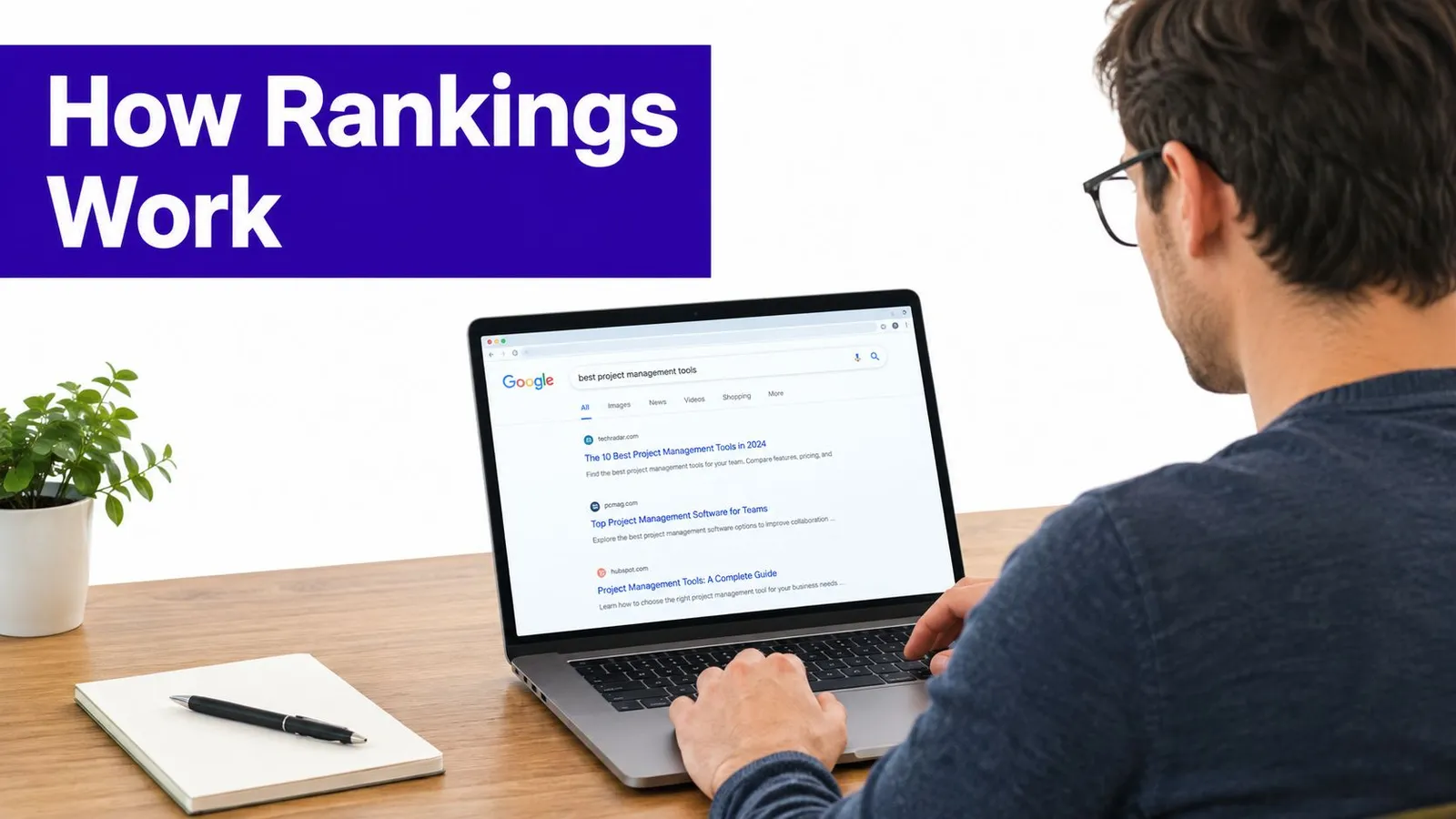
Google's development provides a useful historical outline. Panda launched in February 2011, affected approximately 12% of queries, and targeted low-quality content, content farms, scraped material, and spam; the January 2012 Top Heavy change addressed excessive advertising above the fold; and Google's 2015 mobile update, beginning April 21, targeted pages that weren't mobile-friendly in mobile results, as documented in the timeline of Google Search updates.
Those milestones illustrate a broader principle: keyword relevance isn't sufficient on its own. Original information, page layout, technical usability, and device experience also matter.
For a hypothetical Shopify cookware store, an article about choosing a pan could explain differences that customers can verify against the catalog. Clear material descriptions, care instructions, and product limitations would be more useful than a rewritten supplier description padded with repeated search terms.
Translate the principle into page checks
A merchant investigating an underperforming guide can inspect the page alongside its search queries:
- Question fit: Does the page answer what the searcher appears to need, or does it address a neighboring topic?
- Original usefulness: Does it explain actual product differences, selection criteria, or limitations?
- Reading experience: Can a mobile visitor find the answer without fighting promotional overlays or confusing navigation?
- Catalog accuracy: Do the article's recommendations match the products currently available?
These checks don't reveal a search engine's complete reasoning. They produce a practical editing brief that a merchant can act on and then evaluate through subsequent performance reports.
A focused plan to improve ranking on Google should therefore combine content work with usability checks. Adding a keyword is an edit. Maintaining a useful, accurate page is an ongoing publishing responsibility.
Measuring Rankings and SERP Visibility
A merchant opening Google Search Console should resist the temptation to judge performance from the position chart alone. The search engine results page, commonly shortened to SERP, creates several distinct opportunities: appearing, being noticed, and earning a visit.
Search Console's metrics describe different parts of that process. They become useful when the merchant compares them for the same page, query group, market, and reporting period.
Core Metrics for Judging Organic Visibility
| Metric | What It Shows | Common Misreading |
|---|---|---|
| Impressions | How often a result was shown under the report's counting rules | Every impression represents someone who carefully noticed the listing |
| Clicks | How often searchers selected a result leading to the site | Every click represents a qualified shopper |
| Click-through rate | Clicks relative to impressions | A change must have been caused by the title |
| Average position | An average of recorded result positions across the selected data | The page occupies a fixed spot for every searcher |
Average position isn't a permanent shelf number. A page can appear differently across queries, locations, and devices. A page-level average can also change because the mix of searches changed, even when important individual queries behave differently.
That's why a sitewide average is better treated as an invitation to investigate than as a verdict.
Read a page and its queries together
Consider a hypothetical article about choosing cookware for an induction hob. It begins receiving impressions for both general educational searches and more specific product-selection questions, while clicks remain limited.
The merchant shouldn't immediately conclude that the article failed. The next check is whether the emerging queries match the intended audience and whether visibility is developing around useful buying questions.
A sensible inspection sequence is:
- Select the article: Separate its performance from the rest of the store.
- Review its queries: Distinguish relevant questions from incidental appearances.
- Compare devices and countries: Avoid assuming that the combined average describes every audience.
- Inspect the destination: Confirm that the article gives interested readers a clear route to appropriate cookware.
Broader competitive visibility can also be considered through share-of-voice SEO, but it shouldn't replace page-level investigation.
A report is most useful when it identifies the next page to inspect, not merely whether the chart moved upward.
Search Console describes search performance. Engagement and product-discovery reports answer different questions after arrival, so merchants should keep those measurements connected without treating them as interchangeable.
Technical Signals That Support Stronger Positions
A useful product guide can still be frustrating to use. An oversized image may delay the main content, an app may slow interaction, or a promotional module may move the purchase button while a shopper tries to tap it.
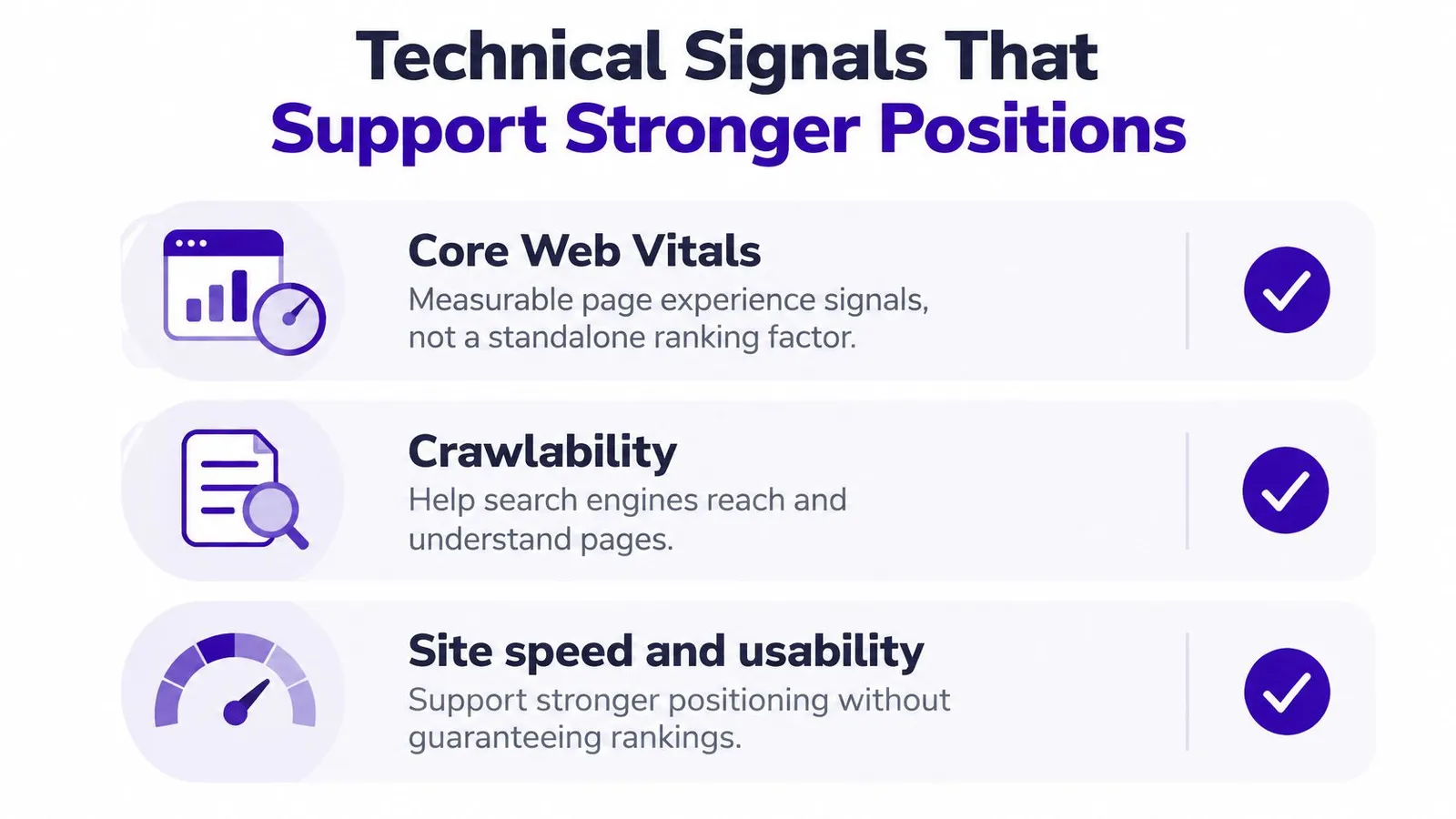
Core Web Vitals turn aspects of that experience into measurable checks. Google considers them within broader page-experience evaluation, not as a standalone promise of stronger rankings.
Connect each metric to a store experience
Google's operational targets are Largest Contentful Paint of 2.5 seconds or less, Interaction to Next Paint below 200 milliseconds, and Cumulative Layout Shift below 0.1, generally assessed with real-user data, according to its Core Web Vitals guidance.
In ordinary store language, these concern loading, responsiveness, and visual stability. Heavy theme JavaScript, oversized product photography, third-party applications, and unstable page elements can make those experiences worse.
Search Console's Core Web Vitals report provides a starting point for identifying affected URL groups. A merchant should then investigate the shared template, not assume the problem belongs only to the example URL shown.
Keep machine-readable details accurate
Structured data supplies explicit information about page entities and attributes. Applicable markup can support rich-result eligibility, but it doesn't automatically raise organic rank, as Google's structured-data policies explain.
For Shopify, useful types may include Product, Offer, BreadcrumbList, Organization, and Article where applicable. The important operational requirement is consistency: marked-up prices, availability, identifiers, images, and titles should match the visible page.
Missing required properties can prevent eligibility. Google's Rich Results Test and Search Console enhancement reports help merchants validate the implementation rather than assuming that installed markup is correct.
A template-level checklist keeps this work manageable:
- Size images appropriately: Compress product and hero images without supplying unnecessarily large files.
- Reserve media space: Define dimensions so images and promotional modules don't push content around.
- Review scripts: Investigate render-blocking resources and app-injected JavaScript before making changes.
- Validate representative templates: Check product, collection, and article layouts rather than testing only the homepage.
- Recheck catalog markup: Confirm that changes to product facts also reach the rendered structured data.
Technical work belongs alongside on-page optimization. A passing performance report removes a possible disadvantage; it doesn't substitute for a page that answers the shopper's question.
Telling Ranking Loss Apart From Lost Clicks
A page can remain visible while fewer people visit it. That possibility changes how merchants should investigate a disappointing traffic report.
The gap between position and visits is the starting point for diagnosis.
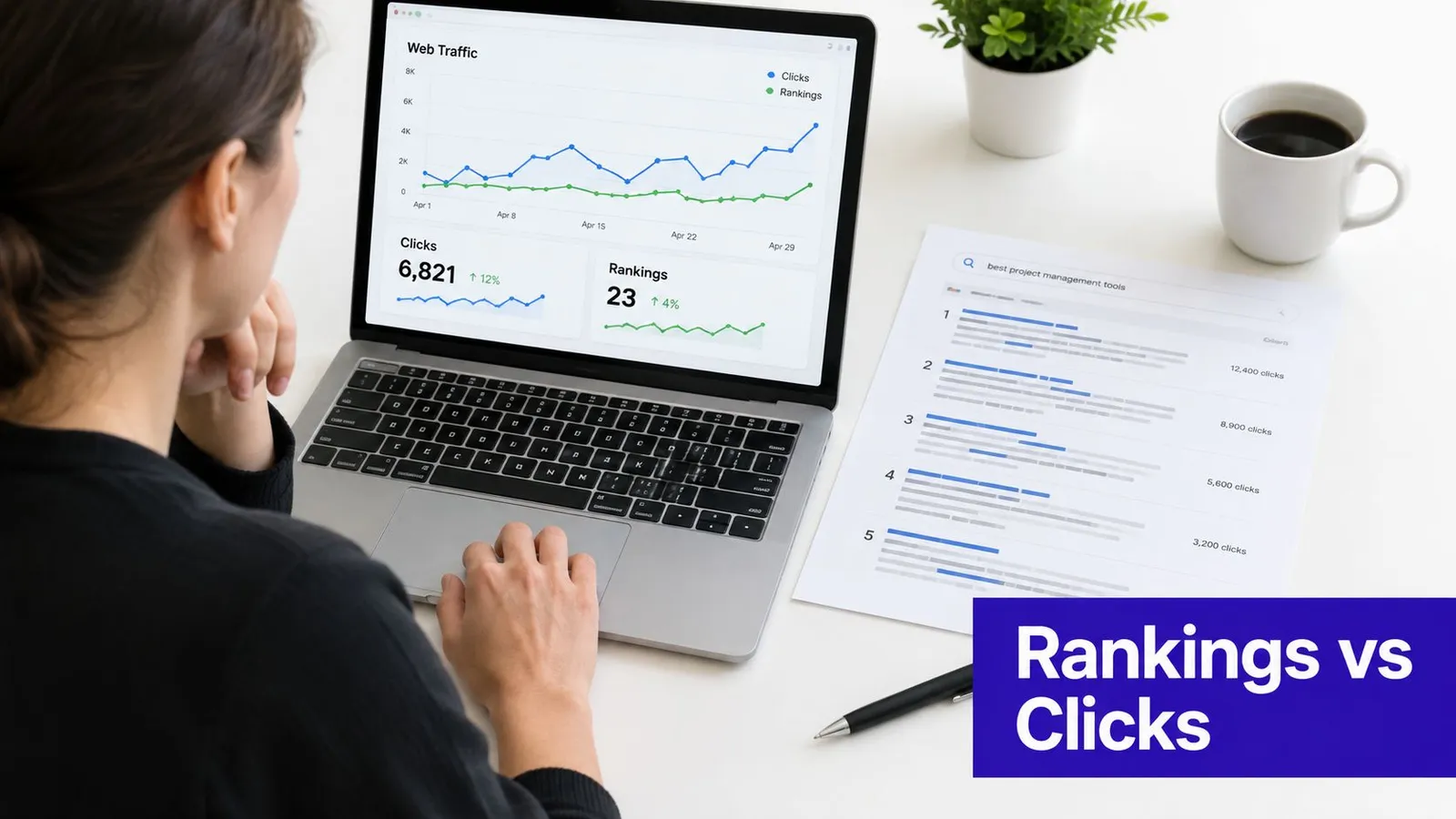
A Pew Research Center analysis reported traditional-result clicks in 8% of visits with an AI summary, compared with 15% without one; Google, meanwhile, says overall organic click volume has remained relatively stable year over year, positions discussed in this overview of AI's impact on SEO. These observations concern different scopes and don't establish what happened to an individual Shopify page.
Separate the competing explanations
Ranking loss means a page appears lower for the relevant searches. Click displacement means a searcher has less reason or opportunity to visit, potentially because an answer or another result feature satisfies the need.
An informational result can resemble a roadside billboard: someone reads it without entering the shop. That exposure may have value, but a merchant shouldn't count an assumed influence as a measured sale.
| Report pattern | Working explanation | Next check |
|---|---|---|
| Position worsens alongside clicks | Possible ranking deterioration | Inspect the same queries and affected pages |
| Position stays broadly steady while clicks fall | Possible click displacement or weaker listing appeal | Review the current results page |
| Impressions change substantially | Possible demand or query-mix change | Compare query groups, devices, and markets |
| Visits decline but product engagement holds | Potentially different visitor quality | Examine landing-page and product behavior |
These are investigative patterns, not automatic diagnoses. Stable aggregate position can conceal losses in commercially important searches.
A visual walkthrough can accompany the report review.
Segment by the shopper's task
For informational searches, such as cookware care questions, the merchant should inspect whether the results page already supplies a sufficient answer. For commercial investigation, such as comparing pan materials, the check is whether the guide helps readers reach relevant products. For transactional searches, the destination should support product evaluation and purchase.
Branded searches, product views, engaged sessions, and revenue provide additional context. They should be reviewed alongside search changes, not presented as proof that an AI mention caused a later purchase.
Diagnostic caution: Fewer clicks don't prove weaker rankings, and strong rankings don't prove commercial usefulness.
The practical response depends on the evidence. A ranking decline calls for page and relevance investigation; apparent click displacement calls for examining the search experience and the value of the visits that remain.
Comparing Tools and Approaches for Tracking Positions
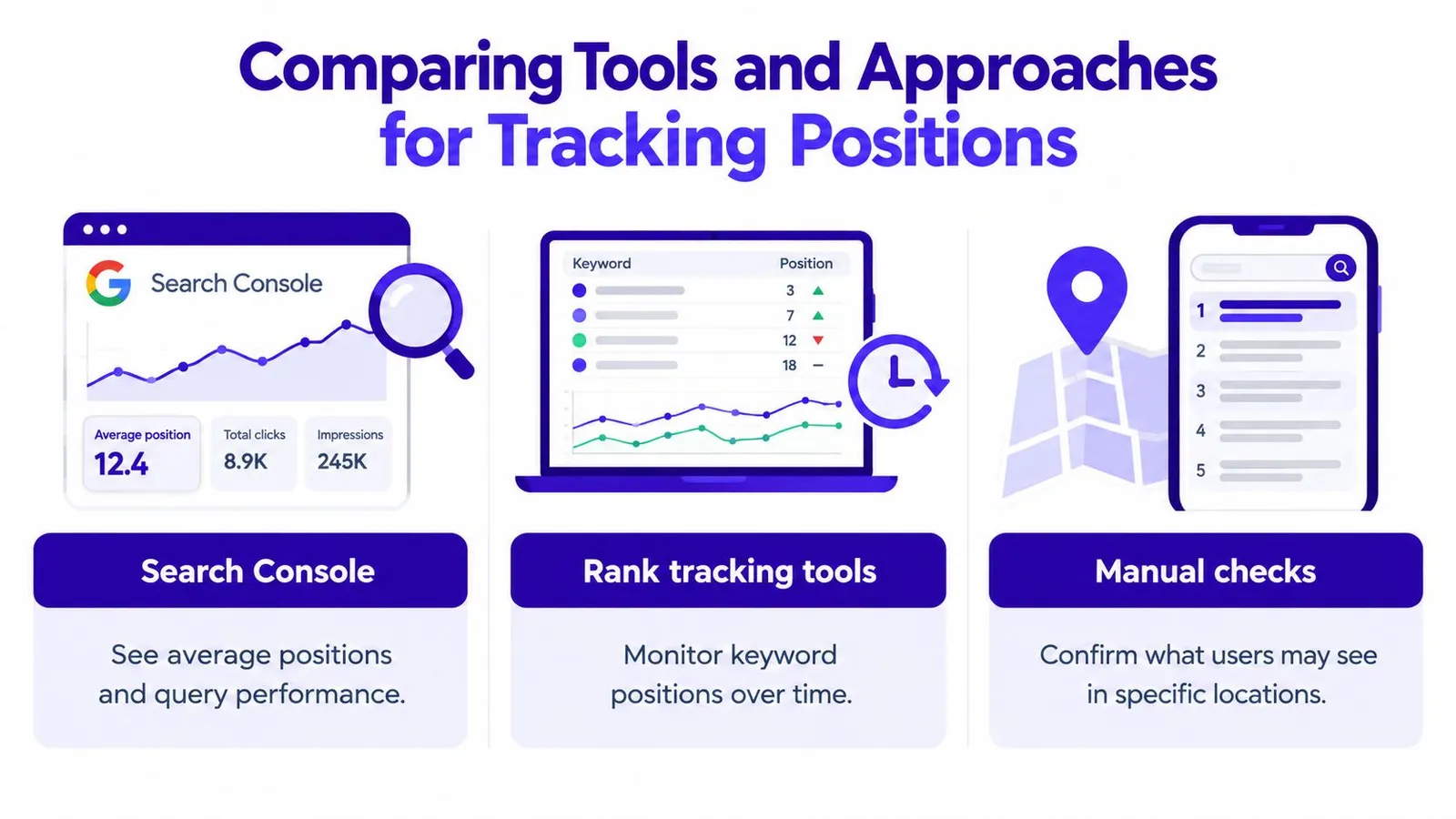
The right tracking approach depends on the question being asked. A merchant checking actual search performance needs something different from an agency monitoring selected keywords in a particular market.
No single report should be expected to explain rankings, AI mentions, and product engagement equally well.
Compare the measurement approaches
| Approach | Data and granularity | Ongoing cost consideration | What It Can't Establish Alone |
|---|---|---|---|
| Search Console directly | Recorded Google search performance, filtered by page and query | Merchant time spent reviewing and interpreting reports | Why a particular results-page layout changed clicks |
| Dedicated rank tracker | Scheduled observations for selected keywords and configured markets | Subscription terms and monitoring scope require comparison | The complete set of searches that produced store visits |
| Store-integrated reporting | Search data presented within a store-oriented workflow | Evaluate the combined workflow rather than reporting alone | Whether visibility caused a purchase without downstream measurement |
Manual checks supplement these approaches by showing a results page at the time of inspection. They aren't a dependable historical record, and an observed result shouldn't be treated as universal across locations and devices.
A repeatable method to check ranking on Google should therefore record the conditions of the check, not merely the observed position.
Keep distinct visibility layers separate
AI citations introduce another measurement problem. One analysis covering 863,000 keyword SERPs and 4 million AI Overview URLs found that 38% of cited pages also ranked among Google's leading ten results for the same query, compared with 76% in an earlier study, as discussed in this analysis of Shopify AI-visibility tracking.
That finding isn't a forecast for a particular store. It does support keeping separate records for:
- Classic ranking: Where relevant pages appear in conventional search results.
- AI citation or mention: Whether an answer includes the store, its pages, or its products.
- Downstream engagement: Whether arriving visitors explore merchandise or take commercially useful actions.
A store-integrated approach is useful when the merchant's main difficulty is connecting content work with catalog context. A dedicated tracker is useful when precise, repeatable monitoring of selected searches is the priority.
Neither choice eliminates the need to inspect product facts across articles, product pages, and regional versions. Consistent information makes the resulting observations easier to interpret and reduces uncertainty about what shoppers encountered.
Building a Monitoring Routine for Organic Positions
A workable routine starts with a baseline rather than an ambitious reporting dashboard. The merchant should select important product and article pages, record the reporting period, and save their impressions, clicks, average position, and relevant query groups.
The same selection should be reviewed weekly. Comparable filters matter more than collecting a large pile of screenshots.
Make each review produce an action
A short monitoring log can distinguish observation from explanation:
- Record the change: Identify which page and query group moved.
- Write a hypothesis: Note whether relevance, technical experience, listing appeal, or the results-page layout needs investigation.
- Log the intervention: Record content edits, template changes, or publishing activity.
- Check product discovery: Review whether visitors reached relevant product or collection pages.
Rankira provides a store-integrated option within Shopify administration. Its read-only Google Search Console connection improves keyword research and fills the Home-page performance charts; its single $39 monthly plan includes keyword research, unlimited scheduled article generation, auto-publishing, internal linking, the backlink exchange, AI images, and the Search Console dashboard.
Allow time without suspending judgment
Rankira recommends two to three months of consistent publishing before judging results because SEO compounds slowly. That recommendation is an evaluation window, not a promise of rankings, traffic, or revenue.
During that period, merchants can still check whether published articles are accurate, whether reporting is connected, and whether readers have relevant catalog destinations. Waiting for performance doesn't require leaving obvious problems untouched.
A practical first-week task is to connect Search Console, save a baseline for priority pages, and schedule the next review. Each review should end with a specific decision: improve a page, investigate a template, inspect a search result, or leave a useful page unchanged while more evidence accumulates.
Rankira connects catalog-aware article production with search-performance reporting, helping Shopify merchants maintain a publishing routine and inspect its results. Merchants ready to connect Search Console and build a baseline for their priority product and article pages can visit Rankira.
Keep reading
All articles
Shopify SEO
SEO New Website Guide: From Launch to First Rankings
SEO new website plan that actually works: indexing, site structure, keyword targeting, content, Core Web Vitals, and tracking from launch to growth.
13 min read

Shopify SEO
SEO Content Writing Principles for Readers and Search
Learn the principles of SEO content writing that balance search relevance, clear structure, and real reader value, with examples for online stores.
10 min read
Shopify SEO
Internal Linking Audit That Actually Improves Rankings
Run a practical internal linking audit to find orphan pages, fix broken links, and prioritize fixes that move revenue on your Shopify store.
10 min read
Put your Shopify blog on autopilot
Rankira researches keywords, writes SEO articles, adds internal links, and publishes them to your store — every week. Start with a 7-day free trial.