Competitive Analysis Services Compared: 8 Firms Reviewed
Compare competitive analysis services by capabilities, intended users, and pricing visibility. Honest notes on limits for SEO and Shopify merchants.
Published 11 min read
In this article
- Table of Contents
- 1. Competico
- 2. DSDillon
- 3. Sedulo Group
- 4. Aranca
- 5. Fuld
- 6. Peak Innovation
- 7. Elevated Signal
- 8. Grow and Scale
- How the Eight Competitive Analysis Services Differ by Use Case, Engagement Model, and Pricing Visibility
- Matching a Competitive Analysis Service to the Decision You Need to Make
A merchant who asks for a competitor review may get a market-entry memo, a campaign teardown, or a multi-month consulting project, and none of those is automatically the file the store needed. The label competitive analysis services covers firms that watch rankings, firms that interview buyers, and firms that brief a board on whether a category is worth entering. Those outputs don't stand in for one another.
Say a Shopify catalog is losing product-page clicks to two stores that publish buying guides the merchant has never written. The useful brief is narrow. Which queries those stores rank for, which collections they cover, and which gaps a small content calendar can close this month. A study of suppliers and financials will not say what to publish on Thursday. The reverse fails too. A keyword gap sheet will not decide whether to enter a new country or rebuild a pricing model.
Names on proposals sound alike because most firms say they "monitor competitors." Scope, buyer, and price do not. Some publish a starting fee and a turnaround. Most ask for a proposal. A few are built for SaaS and B2B software. Almost none are built as a Shopify content workflow.
This guide sorts eight competitive analysis services by the decision a buyer needs to make, then flags where the focus misses ecommerce SEO and content planning. The eight are Competico, DSDillon, Sedulo Group, Aranca, Fuld, Peak Innovation, Signal, and Grow and Scale.
Table of Contents
- 1. Competico
- 2. DSDillon
- 3. Sedulo Group
- 4. Aranca
- 5. Fuld
- 6. Peak Innovation
- 7. Elevated Signal
- 8. Grow and Scale
- How the Eight Competitive Analysis Services Differ by Use Case, Engagement Model, and Pricing Visibility
- Matching a Competitive Analysis Service to the Decision You Need to Make
1. Competico
Competico is the clearest match when the decision is an SEO and content plan, not a board-level market study. The firm sells done-for-you competitive intelligence aimed at SaaS, hosting, and other digital businesses. Work can span organic search, keywords, content, backlinks, paid ads, and AI search visibility, then turn those findings into marketing, content, and product recommendations.
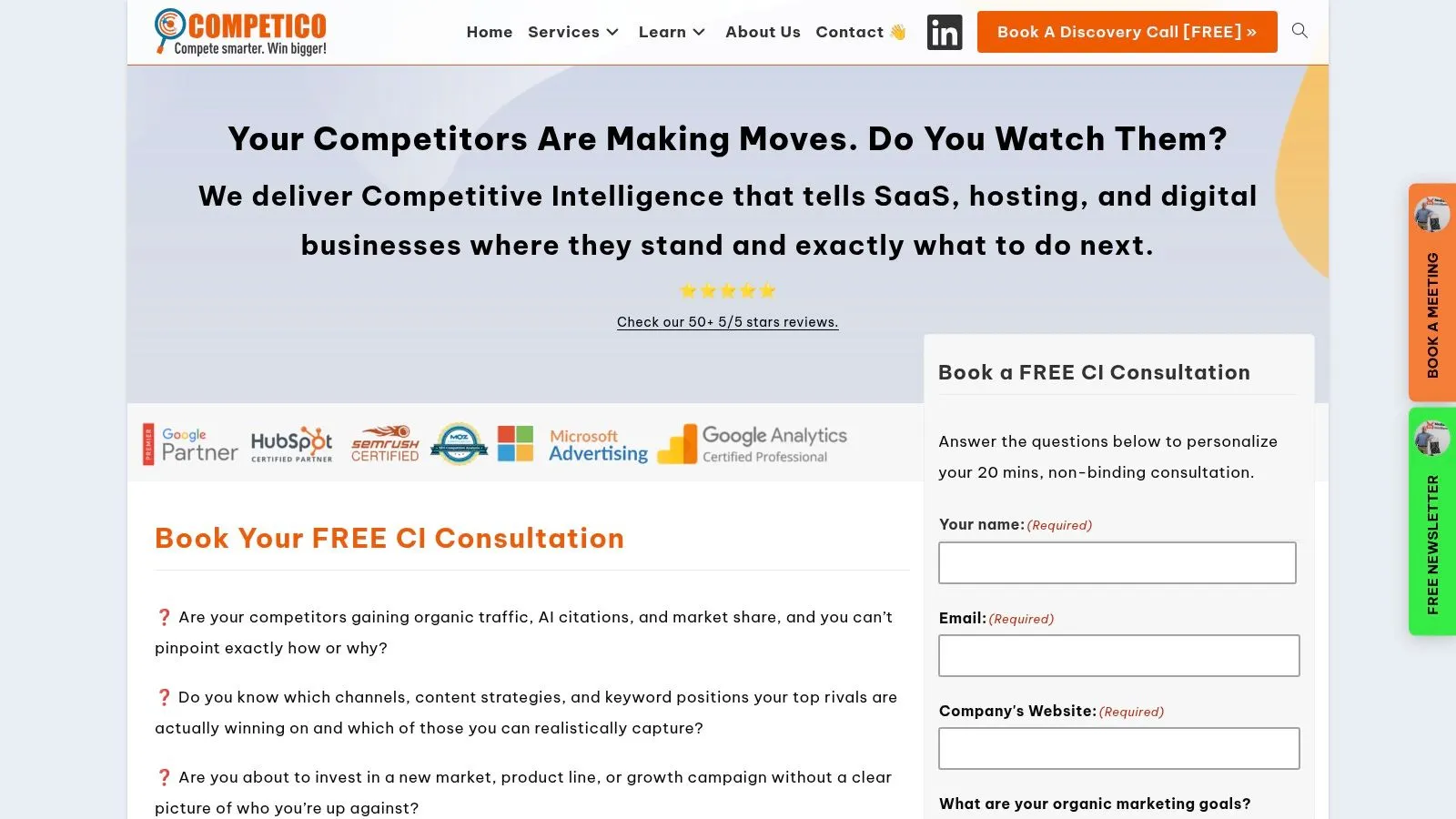
Engagements are not locked to one format. A team can buy a one-off analysis, ongoing monitoring, or an enterprise program. Public, anonymized sample deliverables let a buyer see the shape of the work before a call, which is rare in this category.
Where it fits a content calendar
- Search and content depth: Analysis can run across up to 13 dimensions, including SEO, content, keywords, backlinks, and AI visibility.
- Strategy, not just a list: Competitor strategy analysis and monitoring sit next to the keyword work.
- Flexible cadence: Snapshot, ongoing intelligence, or an enterprise program, depending on how often the plan should change.
A store comparing its own pages with rivals can use that kind of brief the way a comparison to competitors frames gaps, then assign pages to writers. It is a weaker fit for general retail or a non-digital industry, because the stated focus is digital businesses. Pricing is not listed in public. Expect a proposal, not a checkout price. Details sit on the Competico competitive intelligence page.
2. DSDillon
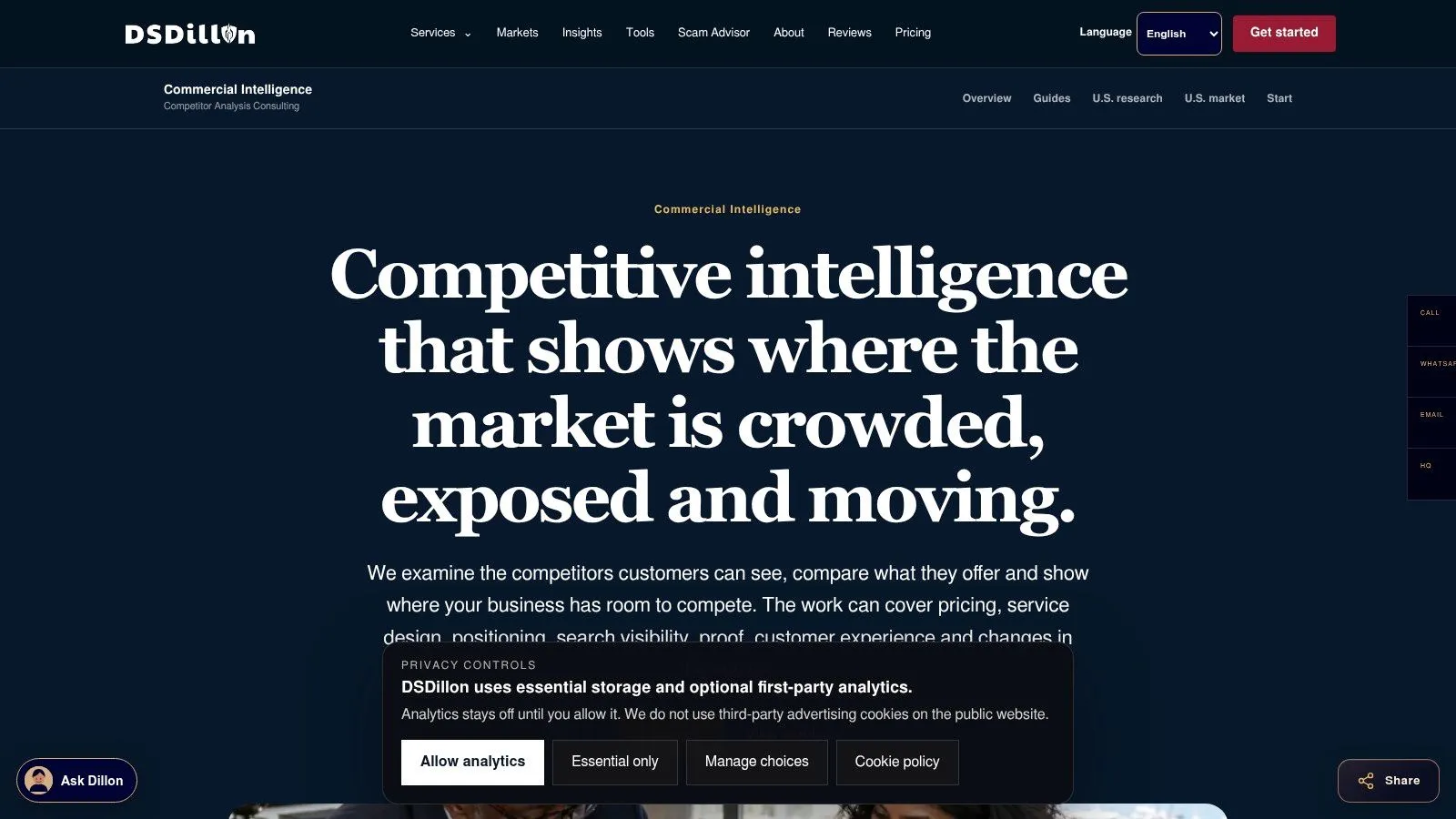
Start with the commercial offer, then ask why a page ranks. That is the order DSDillon uses. The consultancy maps who competes for the same buyers, how packages are built and priced, and how those firms pull search traffic. Rankings and content patterns get tied to specific landing pages and the offer on them, not left as a traffic chart with no price or guarantee beside it.
Scope check: If unpublished prices stay marked unknown, the brief is safer than one that invents a rival's rate to fill a cell.
A baseline study can extend into a watchlist for material changes. Direct, adjacent, and search-visible competitors can all appear. Comparisons cover packages, public pricing, guarantees, calls to action, and proof points, plus queries, landing pages, content, and authority signals.
That mix helps when SEO findings have to survive a merchandising argument. It also means the project is custom-scoped, not a self-serve package, and the brief is broader than Shopify SEO alone. Pricing is not posted. Buyers who only need a repeatable content gap should read a focused SEO competitor analysis before they commission a full commercial study. The offer is described on DSDillon's competitor analysis consulting page.
3. Sedulo Group
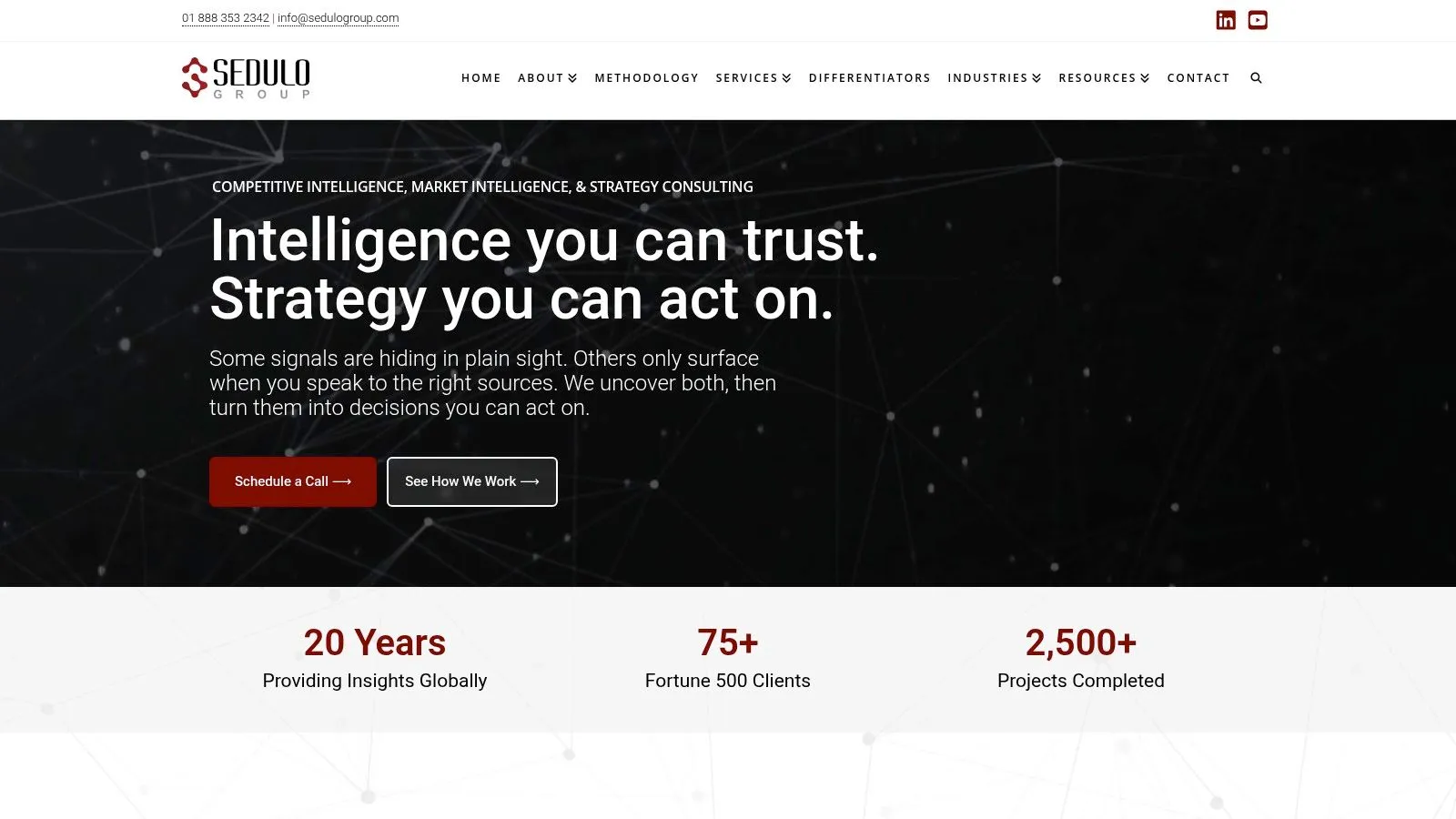
Sedulo Group belongs on the shortlist when the decision is a launch, a market entry, or a response to a competitor move, and desk research will not answer it. The firm is a competitive and market intelligence consultancy that pairs secondary sources with primary intelligence, then frames the output around go-to-market choices. Retail, software, healthcare, and manufacturing all appear in the sector list, so a store is not automatically outside the client mix.
What you are buying
- Judgment, not a dump: Engagements are focused on the client's questions, with interpretation and recommendations in the deliverable.
- Two kinds of evidence: Public sources plus primary intelligence, which matters when websites hide the actual sales motion.
- Leadership-shaped output: Provider-hosted testimonials describe depth, flexibility, and material leaders can use.
This is a heavier engagement than a basic SEO check. There is no public price, and the firm is not a Shopify or content-SEO specialist. A merchant who already knows the three rival domains and only needs publishing priorities will overpay for method they will not use. A team entering a category where customers, distributors, or regulators sit off the public web is the better buyer. See the Sedulo Group site.
4. Aranca
Aranca is built for companies weighing market entry, expansion, or a business model, not for a weekly content sprint. Competitive intelligence here includes deep-dive reports, strategy diagnosis, competitor tracking, company profiles, financial analysis, and outsourced or co-sourced programs. Published case work includes ecommerce competitive analysis plus pricing, positioning, and go-to-market strategy, so an online catalog is not foreign to the practice.
The coverage is wide on purpose. Market and company profiles sit beside tracking of financials, launches, and strategic initiatives, and beside pricing, business models, and sales channels. Recurring monitoring and one-off research are both available.
For a Shopify operator, that breadth is the risk. A report that explains a rival's channel mix will not, by itself, name the next ten articles. Anyone commissioning Aranca should write the decision and the channels into the brief, including whether organic search is in scope. If the job is pages, start from a content gap analysis and keep the consultancy for the commercial question. Pricing and project length are not listed. The service line is on Aranca's competitive intelligence page.
5. Fuld
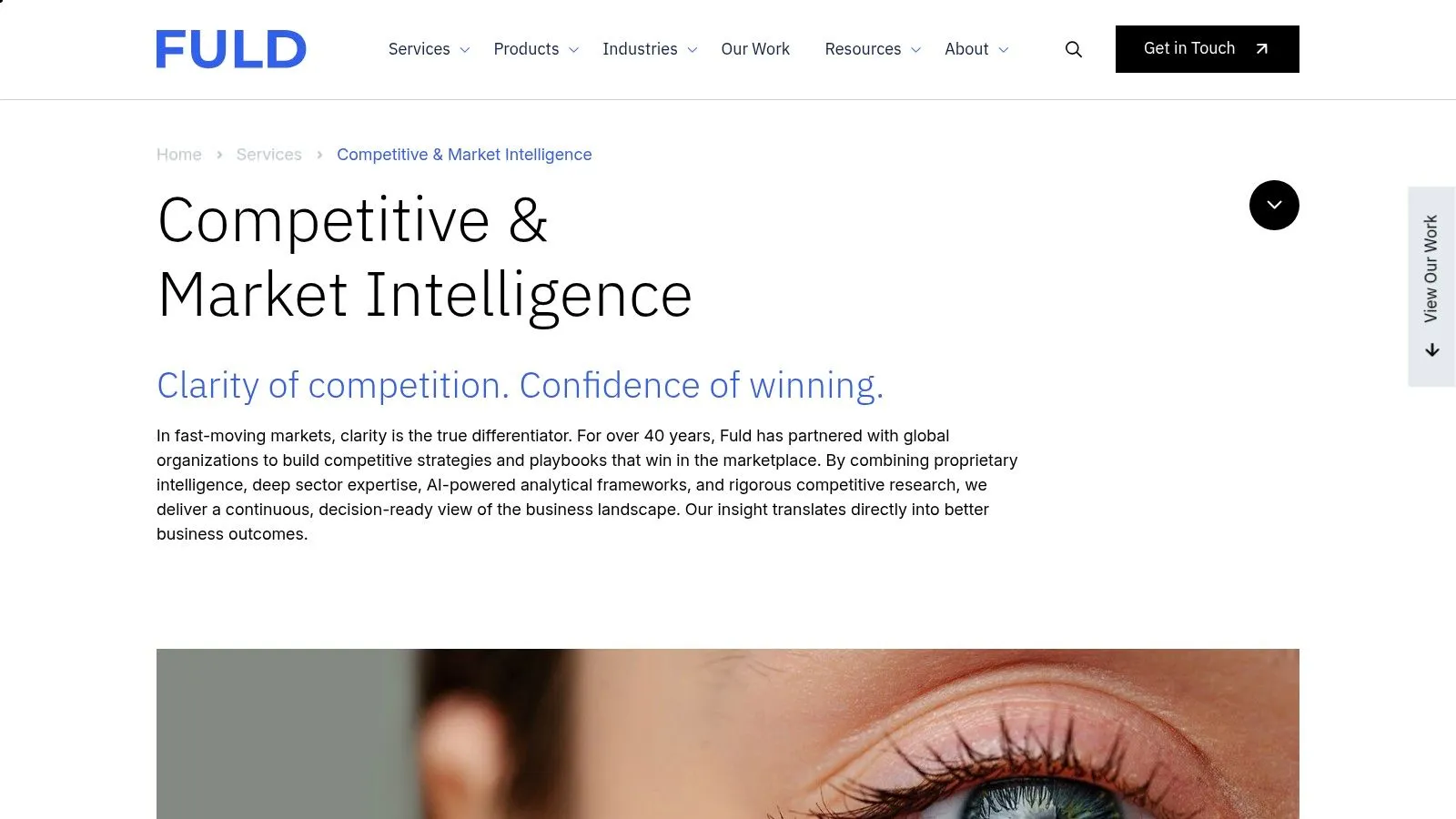
Fuld is a competitive intelligence and strategy firm for organizations that need more than a surface comparison. Competitor deep-dives, benchmarking, sales-enablement intelligence, and broader market intelligence are the core offers. The firm says it combines sector expertise, research, and analytical frameworks so strategy and sales teams can keep deciding as rivals move. It reports more than 40 years in the field.
In that kind of B2B setting, rivalry is the normal sales motion. In 2024, 65% of sales opportunities were competitive for the average B2B software company, according to Crayon's State of Competitive Intelligence survey. A firm that feeds sales enablement, not just a marketing slide, matches that reality.
It does not match a small Shopify content desk. Fuld is not presented as an ecommerce SEO or store-focused service, and pricing is not public. Share-of-voice work for search is a different job, closer to measuring share of voice in SEO than to a multi-year intelligence program. Larger strategy teams are the fit. Smaller stores will feel the engagement size before they feel the insight. More is on Fuld's competitive and market intelligence page.
6. Peak Innovation
Use Peak Innovation when competitor research has to shape a new product, service, or offer, not when it has to fill a blog calendar. Competitive intelligence sits inside a wider market-intelligence and innovation consultancy. The shelf includes competitor profiling, competitive benchmarking, pricing analysis, and win/loss programs, plus product and service innovation work.

Headline price is a weak proxy for the offer a shopper buys. Recent ecommerce research found that 62% of shoppers abandon purchases because of high shipping costs and 51% because of long delivery times, in the 2025 State of Ecommerce findings published by Constructor. A pricing study that ignores shipping, speed, returns, and bundles can recommend a match that still loses the cart.
Provider-hosted testimonials mention flexibility and research depth. That still does not make the firm an SEO, content, or ecommerce specialist. Public pricing is absent. Before a kickoff, confirm which digital channels are in the file and whether recommendations name a test, not only a position. The practice is outlined at Peak Innovation.
7. Elevated Signal
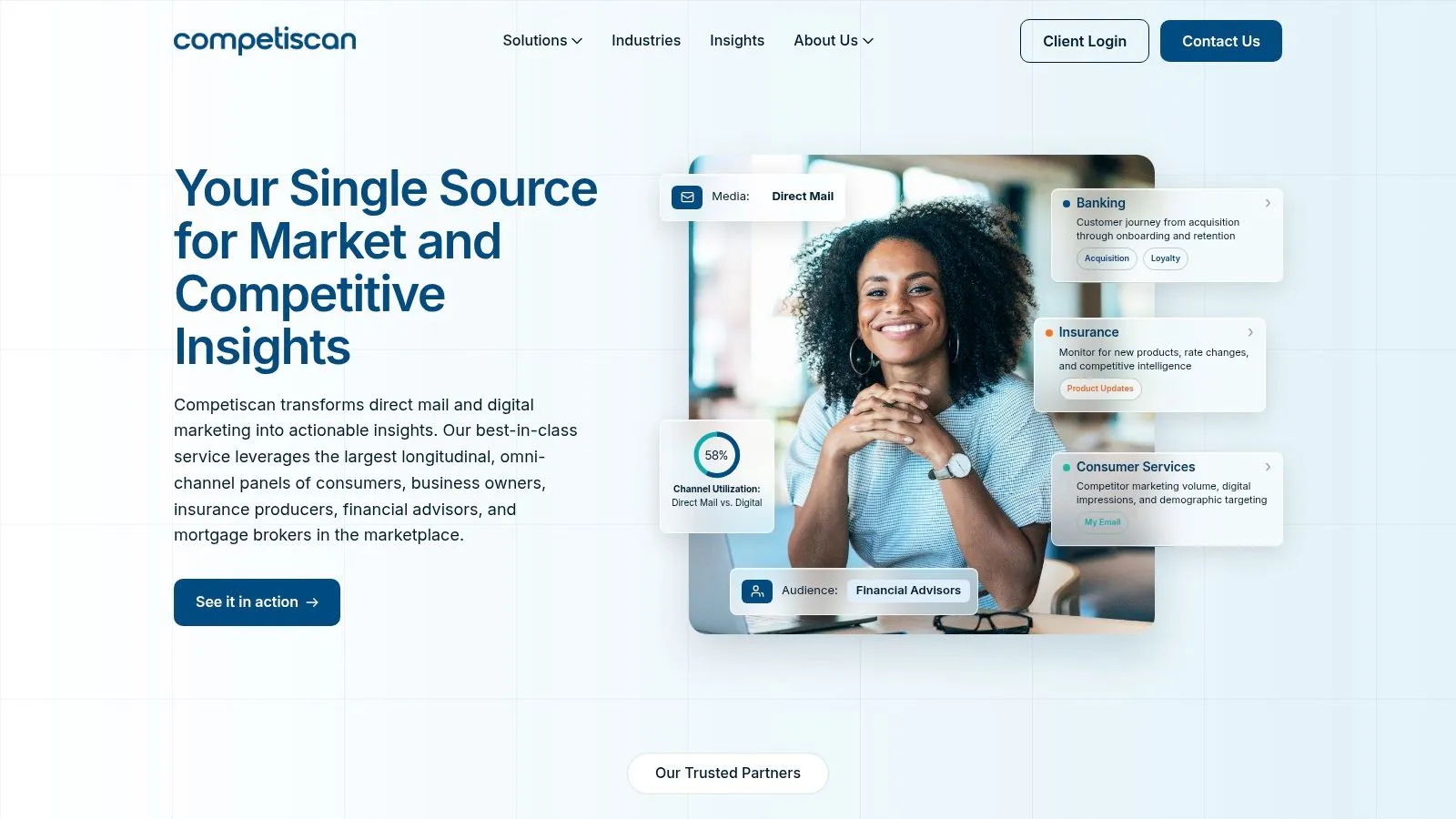
Elevated Signal is the practical inquiry when a team wants a custom report without guessing the floor price. The firm advertises a typical 48-hour turnaround for many reports and starting prices from $500. Scope can include competitor pricing, positioning, hiring, patents, customer sentiment, and strategic recommendations, plus optional monitoring and monthly briefs. Findings are described as checked against independent sources and public records, with customer-voice work drawn from reviews, forums, and social posts.
Its own benchmarking guidance says a practical service should narrow monitoring to roughly three to five competitors and define 10 to 15 metrics tied to explicit strategic questions, as laid out in the Elevated Signal competitor benchmarking guide. That is a useful test of any proposal, including theirs. For ecommerce, the high-value groups named there include traffic sources, conversion indicators, catalog breadth, pricing and discount frequency, customer engagement, and channel mix.
The starting price is not a quote for every scope, and the firm is not an SEO or Shopify specialist. Confirm that rankings, keyword gaps, and content comparisons are in the statement of work. Shops that live in rank-tracking software may still need a website SEO software workflow beside any narrative report. See Elevated Signal.
8. Grow and Scale
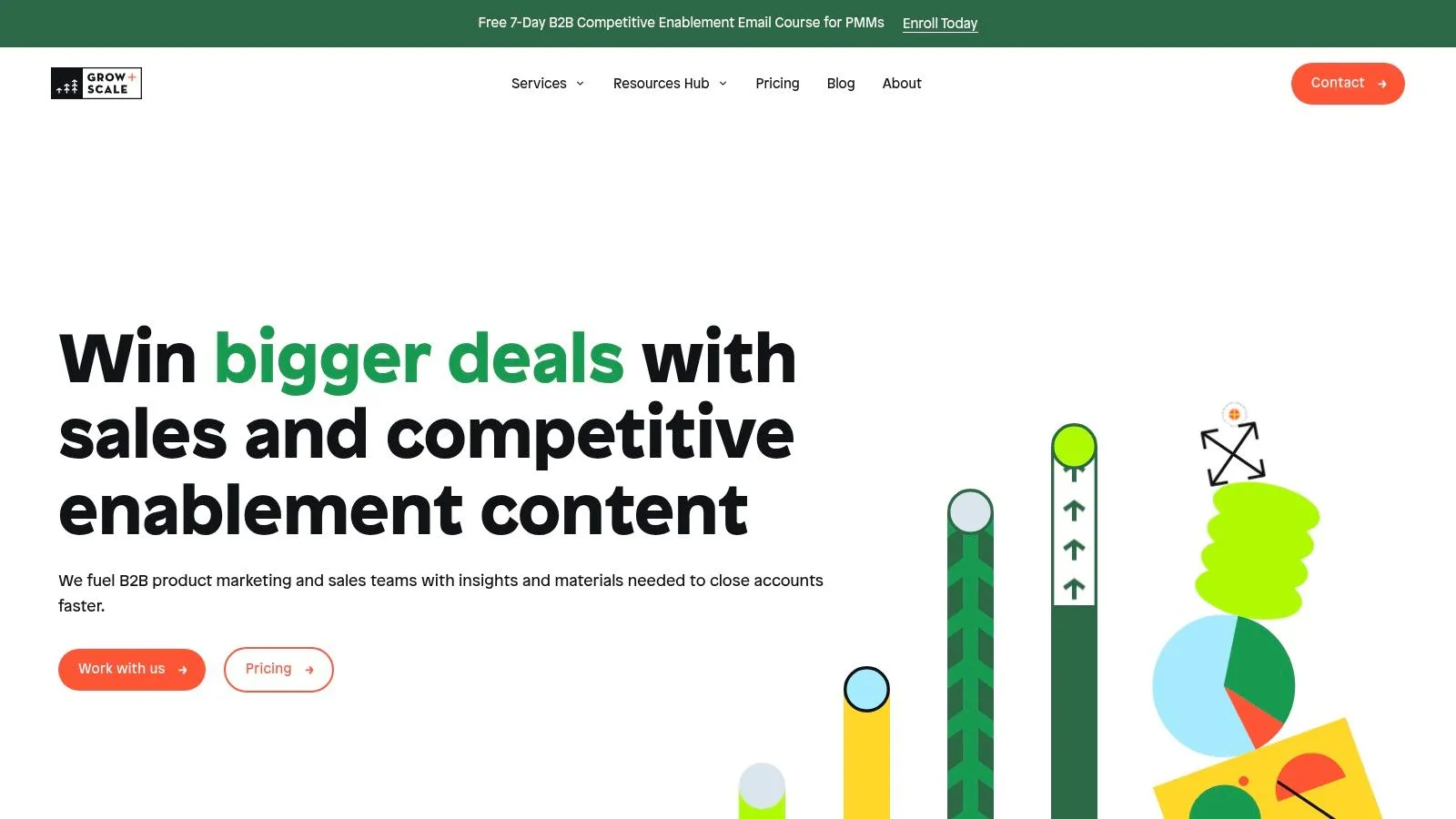
Grow and Scale states its lane up front. Competitive intelligence for B2B technology companies, from research on single rivals through competitive enablement and an outsourced intelligence team. Work can cover pricing, discounting, and positioning, plus secret shopping, public-source research, sales-enablement materials, and monthly outsourced support. The pricing page lists specific prices for several levels, so a buyer can judge the commitment before a sales call. The firm also names companies it says it has supported.
AI is already inside many of those B2B programs. In 2024, 25% of competitive-intelligence leaders reported already using artificial intelligence, while 56% planned to adopt it soon, in Crayon's survey of more than 700 CI, product-marketing, and sales-enablement professionals.
That still leaves most Shopify merchants outside the fit. The specialization is B2B technology, the monthly plans are a substantial commitment, and the firm is not positioned as an SEO or content-competitor agency. A store that needs article topics will not get them from secret shopping a software sales cycle. Read the offer on the Grow and Scale site.
How the Eight Competitive Analysis Services Differ by Use Case, Engagement Model, and Pricing Visibility
| Item | Best For | Engagement Model | Public Pricing | SEO or Content Focus |
|---|---|---|---|---|
| Competico | SaaS, hosting, and digital businesses | One-off analysis, ongoing monitoring, or enterprise program | Not publicly listed; request a proposal | Strong focus on SEO, keywords, content, backlinks, and AI search visibility |
| DSDillon | Businesses connecting competitor research with commercial positioning | Custom-scoped consulting; optional competitor watchlist | Not publicly listed | Reviews search queries, rankings, landing pages, content, and authority signals |
| Sedulo Group | Organizations making market-entry, launch, or strategic decisions | Tailored intelligence and strategy consulting | Not publicly listed | Not a dedicated SEO or content service |
| Aranca | Companies assessing market entry, expansion, or business models | One-off research or recurring outsourced intelligence | Not publicly listed | Ecommerce examples, but not focused on SEO or content gaps |
| Fuld | Organizations needing in-depth competitive intelligence and benchmarking | Deep-dives, benchmarking, or ongoing programs | Not publicly listed | Not presented as an ecommerce SEO or content service |
| Peak Innovation | Businesses using competitor research to inform pricing or innovation | Profiling, benchmarking, pricing analysis, or win/loss research | Not publicly listed | Not specifically focused on SEO, content, or ecommerce |
| Elevated Signal | Businesses seeking custom competitor or market research reports | One-off reports, monitoring, or monthly briefs | Starting at $500; project pricing may vary | SEO coverage should be confirmed for each project |
| Grow and Scale | B2B technology companies needing competitor intelligence and sales enablement | Individual research, enablement support, or outsourced monthly team | Specific prices are published on its pricing page | Not positioned as an SEO or content-competitor analysis service |
Matching a Competitive Analysis Service to the Decision You Need to Make
Name the decision before you name a firm. Search gaps, offer design, pricing, sales enablement, and market entry are different purchases. Competico and, in a more commercial frame, DSDillon are the nearer fits when the output has to change an SEO or content plan. Sedulo Group, Aranca, and Fuld earn their weight when the question is entry, strategy, or a sales motion that public pages will not explain. Peak Innovation fits when the research has to shape a new offer. Signal is the one with a published starting price and a short typical turnaround. Grow and Scale is for B2B technology teams that want enablement and are ready for a monthly program.
A missing public price is a limitation, not a footnote. Seven of these eight firms require a conversation before you know the fee. That is fine for a funded strategy project. It is a poor first step for a store that only needs to see which rival pages outrank a thin collection.
The method underneath a good brief is older than SEO dashboards. Harvard Business School's record of Michael E. Porter's 1979 Harvard Business Review article describes five forces, rivalry, buyer power, supplier power, new entrants, and substitutes, as a structure for profit pressure, not a list of rival homepages. A Shopify brief that only screenshots three homepages misses substitutes, fees, and fulfillment. It also misses the analyst's time. One ecommerce benchmark estimated that about 70% of teams still perform manual website checks, using three to five hours weekly and catching only about 35–40% of meaningful competitor changes, while dedicated platforms were estimated near 25–30% adoption, under an hour a week, and more than 90% change detection, in the Shopvision ecommerce competitive intelligence report. Treat those figures as directional. They still show why a dashboard without a decision rule wastes the week.
Small teams often cannot turn a thick file into a next step. OECD reporting on digital barriers among SMEs notes that 24% of surveyed businesses lacking environmental-data tracking cited insufficient expertise to analyze data and 26% cited insufficient funds for digital tools, in the D4SME 2025 Policy Highlights. The topic is environmental data, yet the pattern matches competitive files too. Collection is not a decision. The adjacent research industry is already large. Figures for 2017 put revenue for the leading 50 companies and 148 full-service firms at $25.55 billion, with $12.34 billion from the United States, in the market-research industry totals summarized on Investopedia. That scale does not mean a small store should buy an enterprise program.
For a Shopify store that needs ongoing SEO and content competitor tracking, a lighter tool can beat a consultancy. Rankira's Competitors setting accepts 3 to 7 other stores and studies what they rank for to find gaps. You add at least three competitors and no more than seven. Rankira is a Shopify app with one plan at $39 per month, including keyword research, scheduled article generation, auto-publishing, and internal linking, with a 7-day trial on new installations. Use a consultancy when the decision is market entry or a sales motion. Use the app when the decision is which articles to publish against rival rankings.
Rankira researches keywords from a Shopify store's products, the competitors you add, and Search Console data, then writes and publishes blog articles aimed at the searches those rivals already win. If the gap you care about is content, not a board briefing, start with the competitor list inside the app and see which topics it surfaces. Visit Rankira to install it on a Shopify store and run the trial before the first invoice.
Keep reading
All articles
Shopify SEO
Search Engine Optimization Plan for Shopify: 2026 Guide
Build a search engine optimization plan for your Shopify store: set a baseline, pick keywords, publish in batches and measure results.
11 min read
Shopify SEO
10 SEO Software Platform Options for Shopify Stores
Compare 10 SEO software platform options by capabilities, use cases, and Shopify fit, from keyword research to publishing and reporting.
11 min read

Shopify SEO
Keyword Density SEO: How to Calculate and Use It
Keyword density SEO is a percentage, not a ranking target. See the formula, sample counts, and how to place phrases without stuffing.
12 min read
Put your Shopify blog on autopilot
Rankira researches keywords, writes SEO articles, adds internal links, and publishes them to your store — every week. Start with a 7-day free trial.